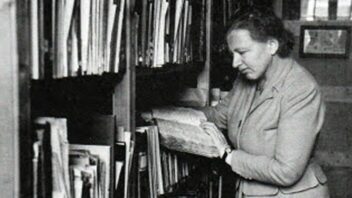
What we preserve and forget determines our history: Dirk van Miert on Radio 1

‘What we preserve and what we forget determines our history.’ This topic was the subject of a discussion between Huygens director Dirk van Miert and Jurgen van den Berg on Radio 1.
The smell of corpses and favourite dolls
Dirk van Miert explains in the interview how the digital revolution is making more historical data available. For example, stories about the pungent smell of corpses on VOC ships. Or the favourite doll of the beloved daughter of a famous intellectual. However, digitisation also makes it clear that sources are selective. What is not omitted? What is omitted? How should we approach the data in sources?
Who selects the data?
Van Miert says, ‘We are in the midst of a technological revolution, but our social power structures are hardly changing.’ Who selects the data? What role do tracking, surveillance, and archives play in power relations? Technology only becomes meaningful when ethics and historical reflection are taken into account. Without interpretation and context, digital data, like paper archives in the past, could be misused or misread. That is why young scholars of text and archives are just as needed as young technicians.”
Listen to the interview here. Dutch spoken.